Eau de parfum (EDP) and eau de toilette (EDT) differ in one thing you can measure: how much fragrance concentrate is mixed into the alcohol. EDP usually holds about 15 to 20% concentrate and EDT about 5 to 15%. That number tells you how strong a spray is, but not how long it lasts. The materials in the formula decide that.
Perfume concentrations at a glance
The names on a bottle are strengths of the same thing: a fragrance concentrate diluted in perfumer’s alcohol, sometimes with a little water. Houses set their own ranges, so treat these as typical values, not rules.
| Name | Typical concentrate | What to expect |
|---|---|---|
| Parfum (extrait) | 20 to 30% | The richest and most intense, usually sprayed or dabbed sparingly |
| Eau de parfum (EDP) | 15 to 20% | Full and rounded, the most common strength for everyday wear |
| Eau de toilette (EDT) | 5 to 15% | Lighter and more open, easy to wear in warm weather |
| Eau de cologne (EDC) | 2 to 5% | Very light, classically built on citrus |
Some references give EDP as 10 to 20%, and a few brands sit outside these bands. The label tells you the name the house chose, not a guaranteed percentage.
What the percentage means in grams
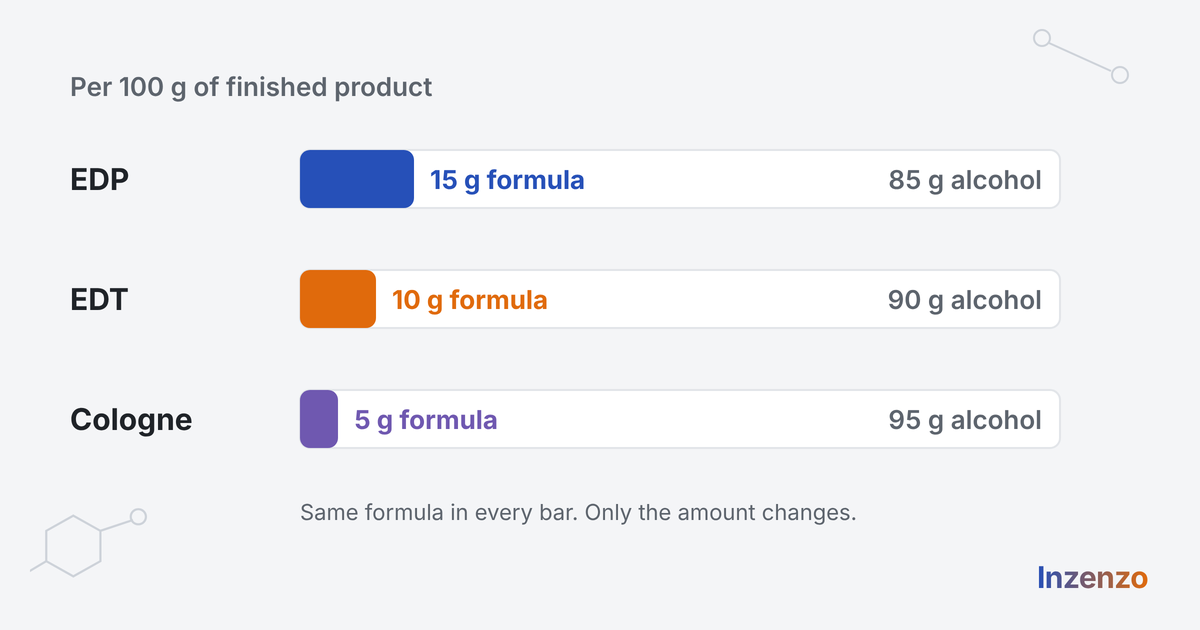
Strength is simple arithmetic. Say a bottle holds 100 g of finished product:
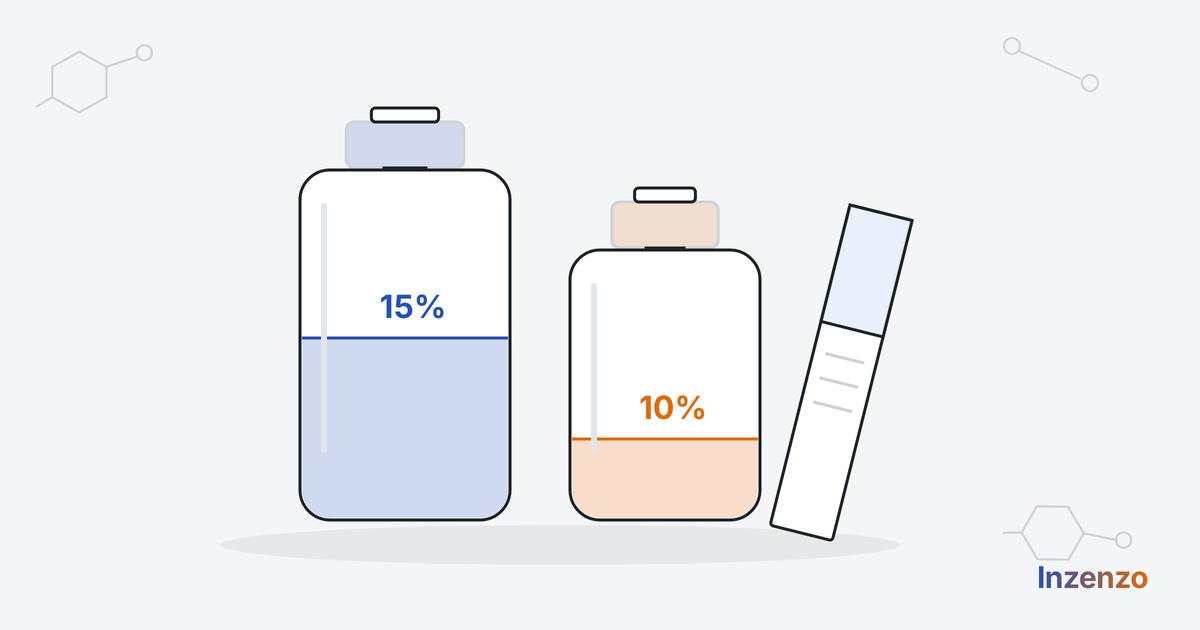
- At 15% (a typical EDP), 15 g is your fragrance formula and 85 g is perfumer’s alcohol.
- At 10% (a typical EDT), 10 g is formula and 90 g is alcohol.
- At 5%, you use 5 g of formula and 95 g of alcohol.
The formula itself does not change. Only the amount of it in the bottle does. A formula is always written as the pure concentrate. To dilute it, scale every weight to the strength you want, then add perfumer’s alcohol up to the total.
Longevity comes from the materials, not the strength
Here is the part many bottle labels skip. A perfume lasts as long as its longest-lasting materials allow. Concentration changes how loud it is, not how long it lives.
Every material evaporates at its own pace. Light, volatile materials such as citrus oils (bergamot, lemon, grapefruit) leave the skin quickly. Heavy, slow materials such as musks, Ambroxan, vanillin, patchouli, vetiver, sandalwood, benzoin and labdanum stay for hours and can still be on a scent strip or a shirt the next day. If a formula is built mostly from the fast group, nothing you do to the strength fixes that.
Think of it as two experiments you can run yourself:
- A citrus accord at a high strength. Build a bright accord of bergamot, lemon and a little neroli. Mix it at 25% as an extrait. It will be bigger and louder in the first hour, and the citrus will still be mostly gone well before the end of the day, because the materials are volatile.
- A base accord at a low strength. Build a simple blend of a musk, Ambroxan and vetiver and dilute it to 5%. It will be quiet at first, but it keeps going long after the citrus is gone, because the materials are slow.
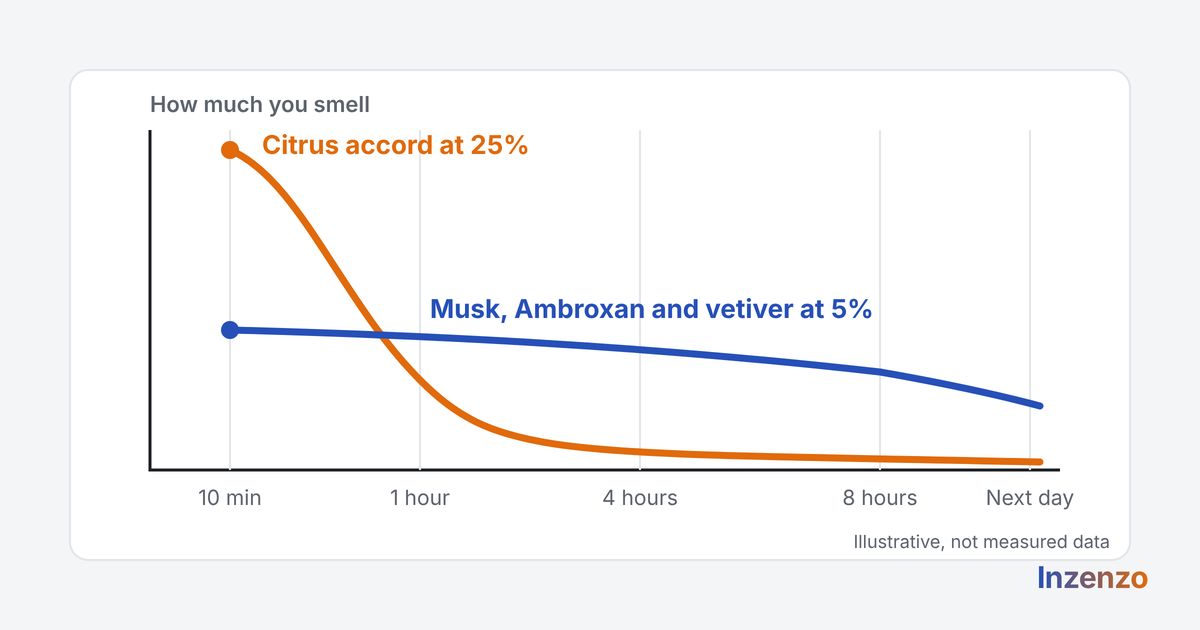
The same logic explains why a classic eau de cologne fades fast, and why a woody-amber EDT can outlast a citrus EDP on the same skin. The cologne is built from materials that leave quickly. The woody-amber is built from materials that stay.
Can a base material rescue a fragile top note? Only a little. Adding slow materials, often called fixatives, can slow how fast the lighter notes leave, and a good formula uses them to give the scent a backbone. But a bergamot note will never outlast the musk next to it. If you want a fragrance to last, design it with long-lasting materials from the start, then choose the strength you like.
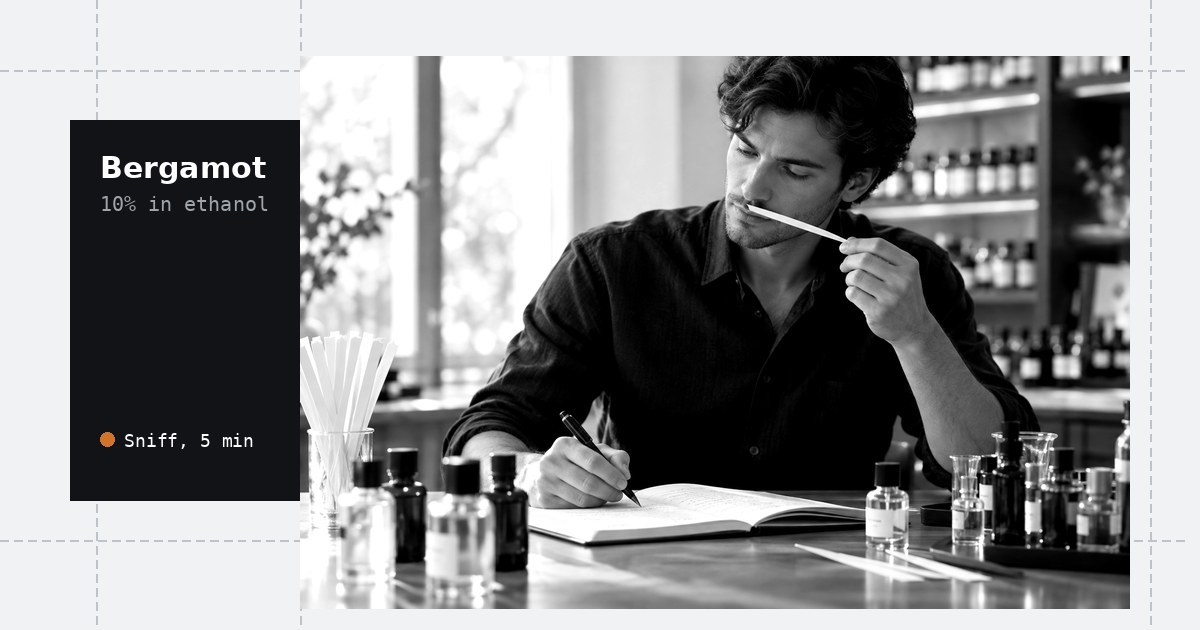
To judge how long a material lasts before you use it, put a drop on a scent strip, smell it at set times (after 10 minutes, 1 hour, 4 hours and the next morning) and write down what is still there. Do the same with your finished blend. That tells you more than the label ever will.
Why you stop smelling your own perfume
Sometimes a perfume seems to vanish after an hour, and the real cause is not the perfume but your nose.
Your nose adapts. When you smell the same thing continuously, the signal fades and you stop noticing it. This is called olfactory fatigue, or being nose blind. Heavy spraying makes it worse: the more you put on, the faster your nose tunes it out, and the more you are tempted to add another spray. Meanwhile, people around you can still smell it, and sometimes more than you intended.
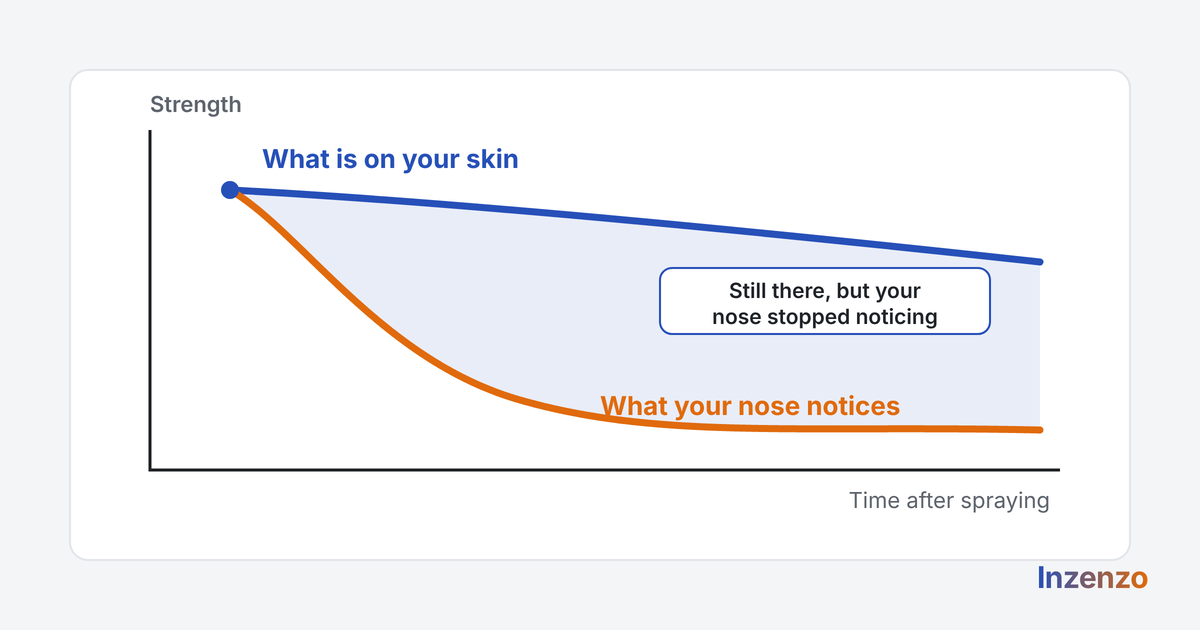
If you think your perfume does not last, check this first:
- Use fewer sprays and see whether it still seems to disappear. If it lasts longer to you, your nose was the problem.
- Step into fresh air and take a break before smelling again.
- Smell your clean, unscented skin or a fresh strip for comparison.
- Ask a friend whether they can still smell it.
- Test on a scent strip at set times instead of on your own skin, so your nose meets the scent fresh each time.
You may have read that smelling coffee beans resets your nose. It is a popular habit in shops, but the evidence for it is weak. Fresh air and a pause are the safer bet.
How to choose between EDP and EDT
Choose by how you wear it, not by the idea that one is better. EDT suits warm days and light, open compositions. EDP suits cooler weather and fuller, richer compositions. Then look at what the formula is built from. A sparkling citrus EDP will still fade faster than a deep woody EDT, so read the notes and, if you can, try it before you buy.
If you make your own perfume, pick the strength last. Build the accord first, test how it wears, and then dilute it to the strength that suits the product. Keep an eye on the limits too.
Why strength changes the IFRA limit
IFRA limits are set for the finished product, not for your concentrate. So the same formula can be fine at 5% and over the limit at 20%, because a higher strength puts four times more of every ingredient on the skin.
A simple example with made-up numbers: say a material makes up 10% of your formula and its limit in the finished product is 1%. The most you can use is the limit divided by its share of the formula, so 1 ÷ 0.10 gives 10%. At an EDP strength of 15% you would be over the limit. At 10% you would be at it. The lowest result across all your ingredients sets the ceiling for the whole formula.
Do this sum for every ingredient that has a limit. The lowest result is the most you can use of the whole formula. Always confirm the limits against the current IFRA standards for your product category.
Frequently asked questions
What is the difference between eau de parfum and eau de toilette?
Concentration. Eau de parfum usually contains about 15 to 20% fragrance concentrate and eau de toilette about 5 to 15%. The ranges vary by house, so the name tells you the intended strength, not an exact figure.
Does a stronger concentration make a perfume last longer?
Not on its own. A higher strength makes a perfume more intense, but how long it lasts depends on the materials in the formula. A formula built from fast-fading materials stays short-lived at any strength.
Is cologne only for men?
No. Eau de cologne is a light strength, classically citrus-based. In some markets, especially the United States, shops call men’s fragrances cologne whatever the strength. On the label, check the strength name instead.
Is parfum the same as perfume?
No. Perfume is the general word for a fragrance. Parfum, or extrait, is the highest concentration, usually 20 to 30%.
Why can I not smell my perfume after a while?
Your nose adapts to a smell it meets continuously, so you stop noticing it even though it is still there. This is olfactory fatigue. Spray less, take a break in fresh air, or ask someone else whether they can smell it.
How can I make a perfume last longer?
Choose, or build, a formula from long-lasting materials such as musks, woods, resins and ambers. Then adjust the strength to how loud you want it. Strength alone will not rescue a formula made from fast-fading materials.